
By Carl Nolte
Excerpt from The Sea Letter, Fall 2018 # 77
It wasn’t that long ago that the maritime world was a man’s world. The captains of ships were all men, so were seagoing naval officers. Maritime executives belonged to men’s clubs where they talked business with other men over drinks and cigars. Few women went to sea; but usually as the wife of the ship’s master. Fewer still learned the difficult art of navigating a ship.
Some, like Mary Patten, the wife of Captain Joshua Patten was so accomplished that her husband praised her to the maritime community. “Mrs. Patten is uncommonly handy about the ship, even in weather, and would doubtless be of service, if a man.’’
Mary Patten was of service, in fact. On an 1856 voyage from New York to San Francisco, she took command after her husband became ill and brought the ship around Cape Horn to the Golden Gate.
It the 1890s, Mrs. Eliza Thorwald owned and operated a steam tug on San Francisco bay. But a woman running a tugboat was so unusual that the San Francisco Examiner sent a re-porter to the waterfront to interview her. The reporter found “a bright and active little woman,” who kept the boat “spick and span’ and the wheel-house “as clean as a model house-keeper’s kitchen.’’
She was ahead of her time. There were no women tugboat captains on San Francisco bay until 1980, 85 years after the Examiner described how Eliza Thorwald’s “soft white hands laid hold of the wheel”.
Jan Tiura was the first licensed woman tugboat captain on the bay. Women had to sue the Inland boatman’s Union to get a job on the tugs. Now a woman named Marina Secchitano is international president of that same union. We’ve all come a long way.
Now women are not only tugboat captains two women run Westar Marine, one of San Francisco’s major tug and barge companies. Women are ship captains and ferry-boat skippers.
Nina Rannels is the executive director of the Water Emergency Transportation Authority, which runs most of San Francisco Bay’s ferry system. She re-ports to Jody Breckenridge, a retired Coast Guard vice admiral who is chair of the agency’s board.
Not long ago, none of this would have been possible. It was a sea change in the maritime industry and change is never easy. This one was particularly difficult. Women seeking maritime jobs were frozen out. Women seeking positions as sea officers were told they weren’t qualified, no matter how qualified they actually were.
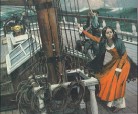
Oil painting of Mary Patten
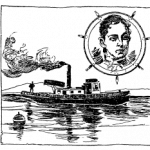
Drawing of Eliza Thorrold